
The Challenge of Representing a Watershed
The watershed is not a single place. It’s a connected system of rivers, tributaries, and conserved lands spread across towns and environments. RRCT’s previous identity didn’t reflect that complexity. It centered on a single mark, with limited flexibility to communicate how individual properties relate to the larger landscape. At the same time, the organization serves multiple audiences: community members using trails and public lands, donors funding conservation efforts, and municipal and regional partners. The system needed to be legible to the public, while credible enough to support fundraising and long-term partnerships.
Brand System Inspired by Watershed Mapping
We built the identity around the structure of the watershed itself. Visual forms are derived directly from watershed mapping data and developed into a flexible set of graphic elements. These forms shift and recombine across applications, mirroring how individual parcels of land connect within a larger environmental system. Rather than relying on a single logo, the identity operates as a system: Graphics scale from small touchpoints to large-format maps Layouts emphasize relationships between places, not just locations Repeated forms reinforce the idea of connection over time This allows the brand to represent both individual conserved lands and the broader watershed they belong to—without simplifying the system into a single symbol.
Making Conservation Work Visible
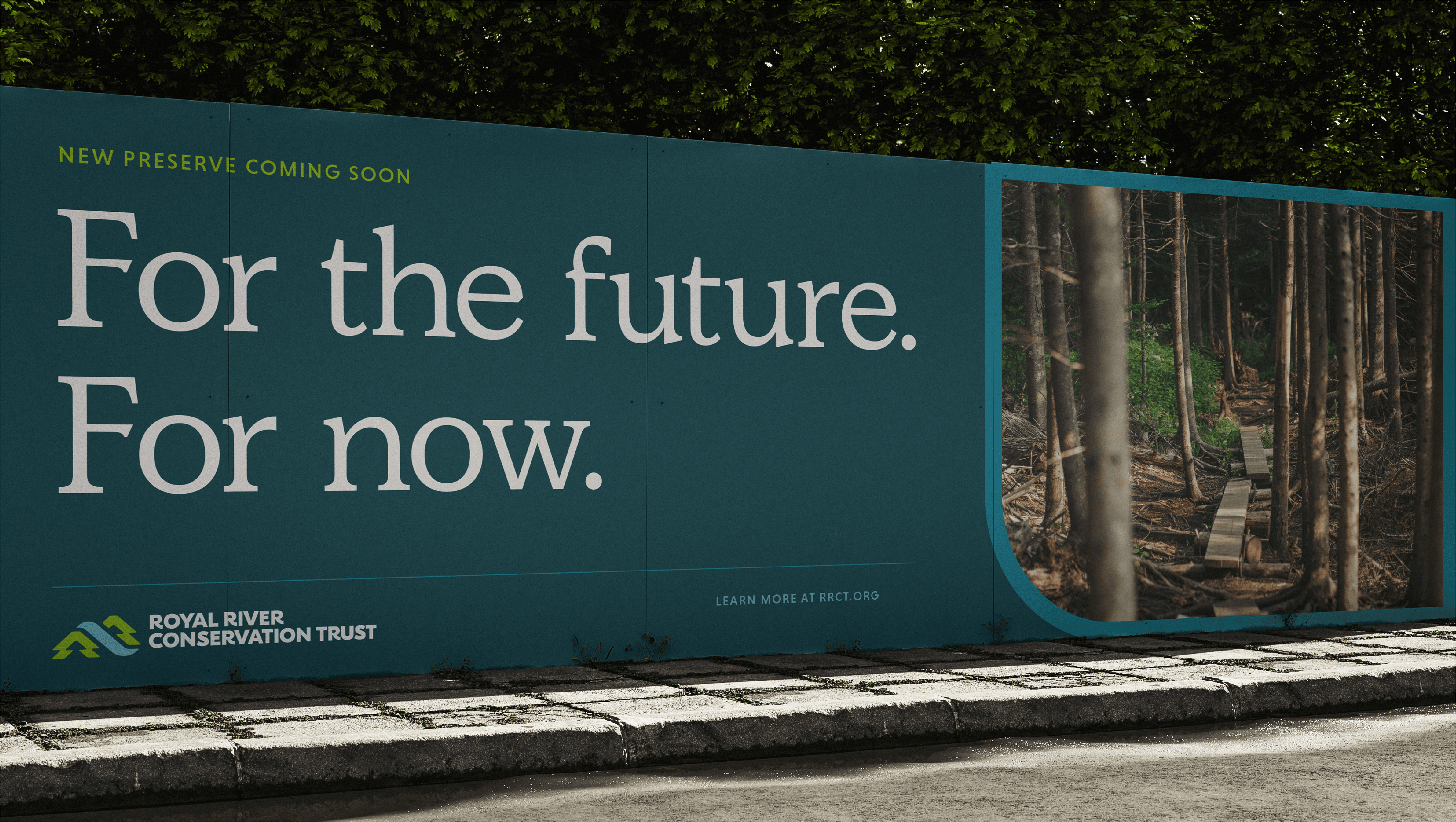
Much of RRCT’s work happens out of view. Land is protected gradually, and its impact isn’t always immediately obvious. We focused on making that work easier to see and understand. Instead of presenting properties in isolation, the system shows how each piece of land fits into the watershed as a whole. Mapping, diagrams, and structured layouts connect individual sites into a continuous landscape. This shifts the story from a collection of properties to a connected system—helping people understand not just what is protected, but why those connections matter.
Website and Interactive Mapping Experience
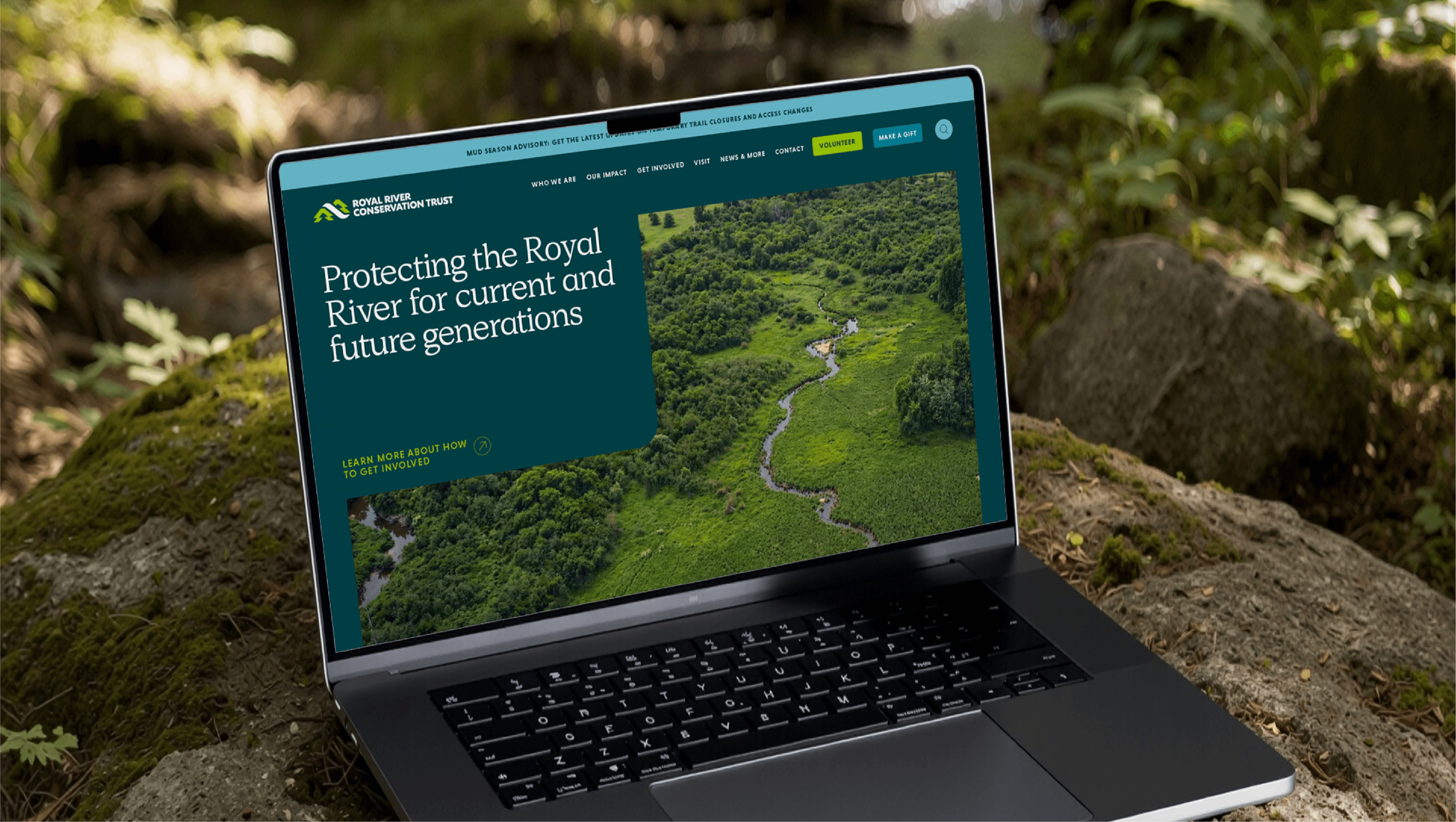
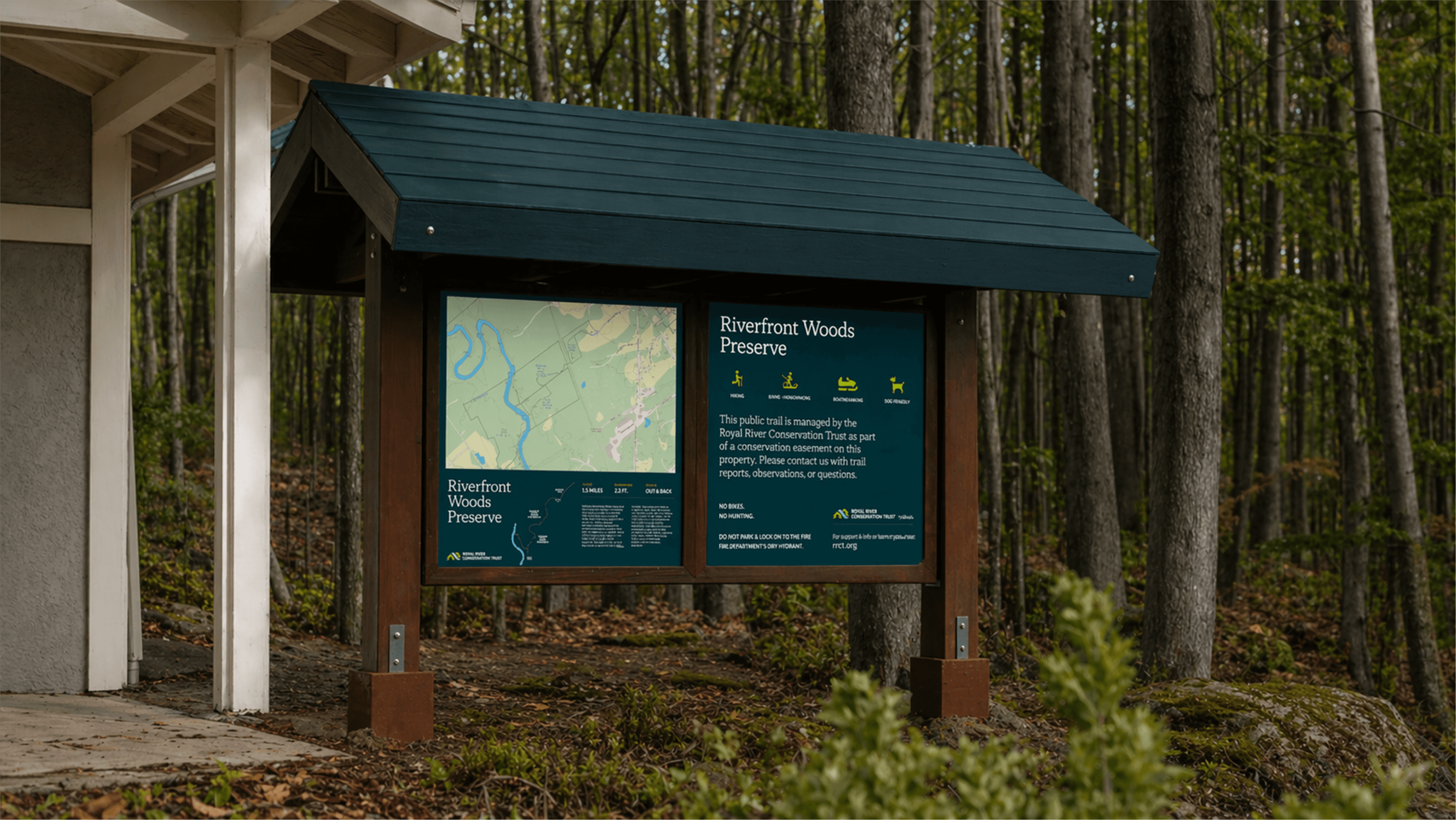
The website extends this system into an interactive tool. Mapping plays a central role. Users can explore conserved lands within the watershed and understand how different areas connect, rather than navigating a list of disconnected properties. Content is structured to support both quick access and deeper exploration; allowing first-time visitors to orient themselves while giving ongoing supporters more context. The site functions as both a public resource and a platform for long-term engagement.
Outcome
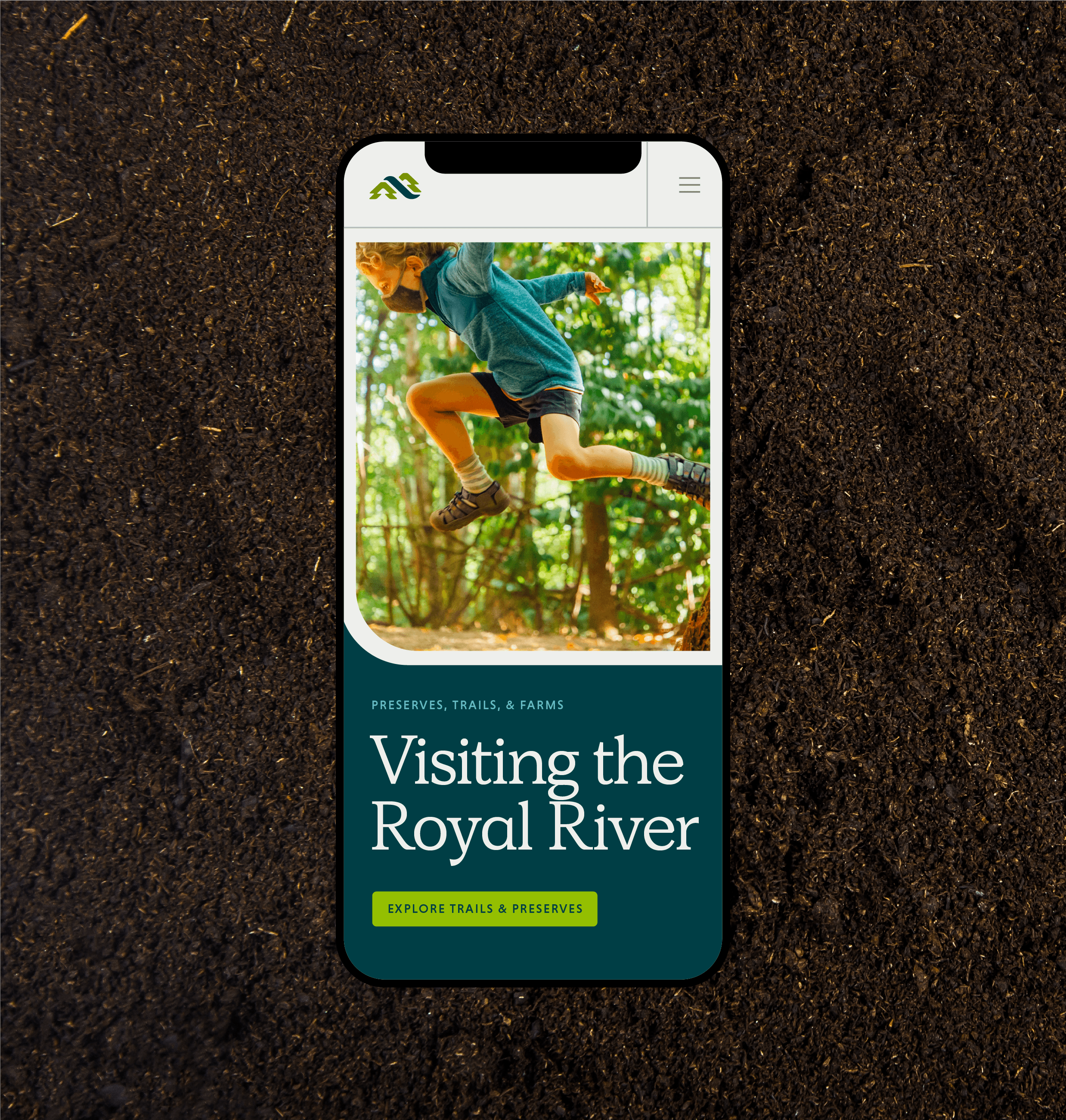
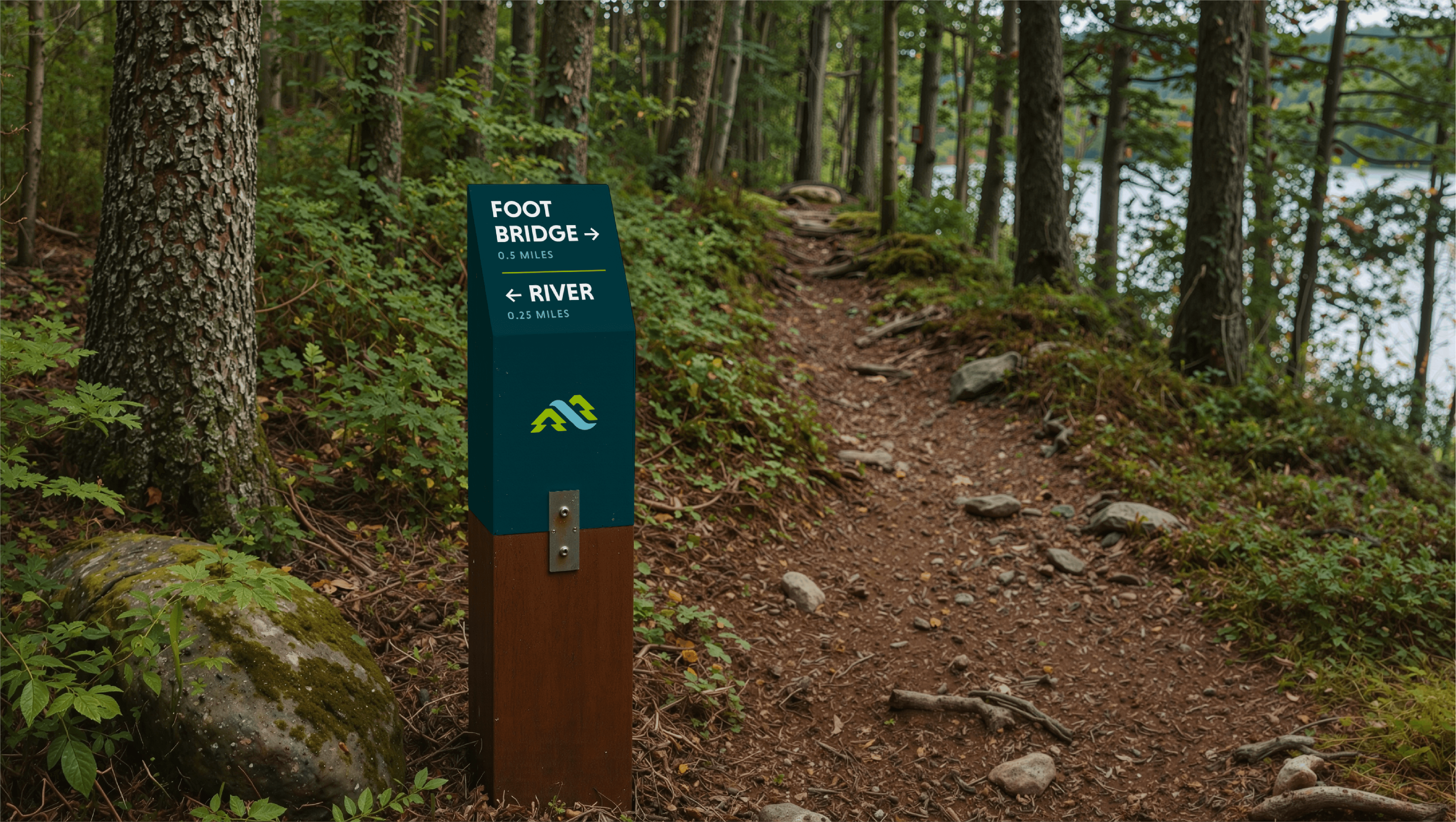
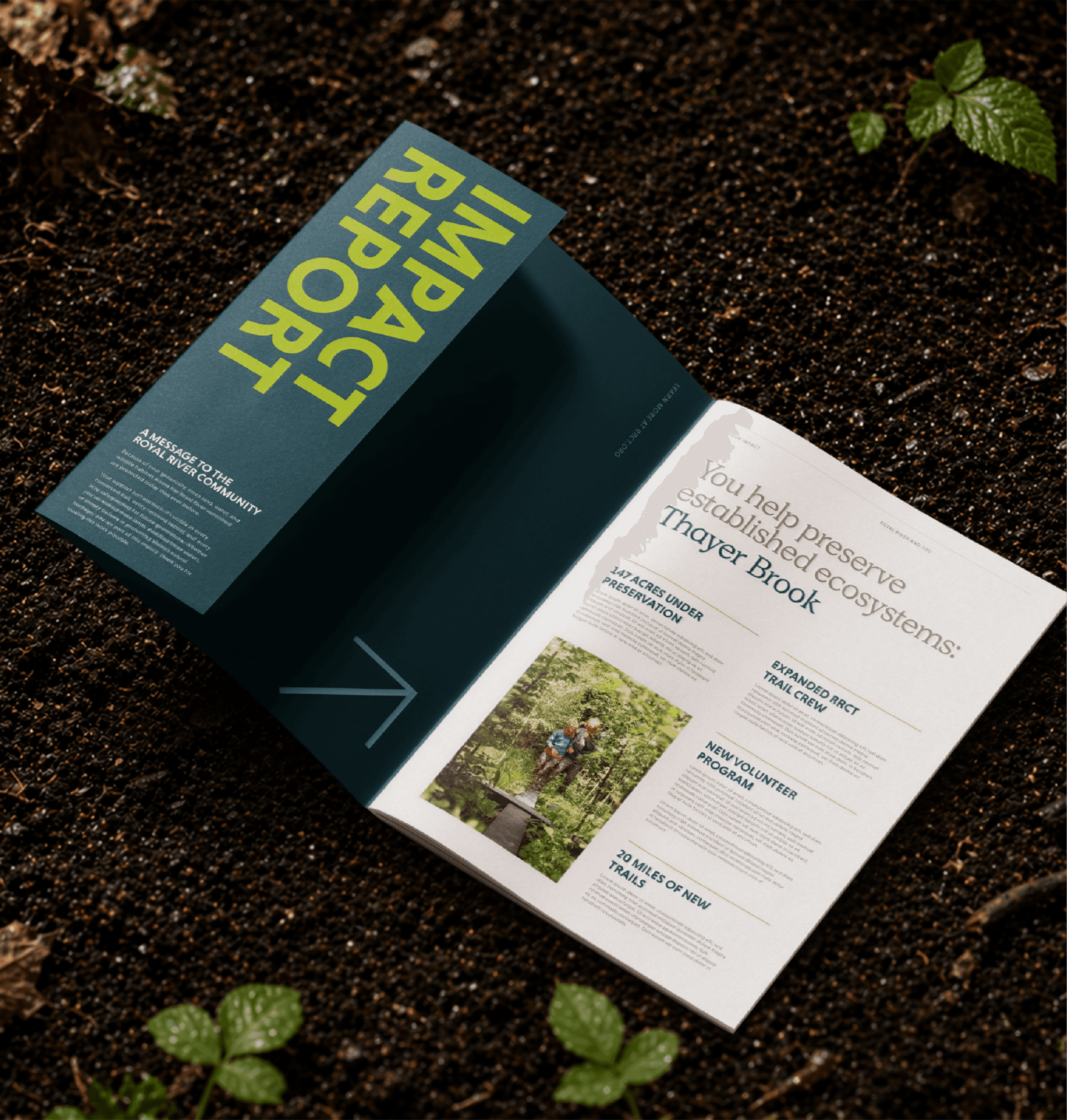
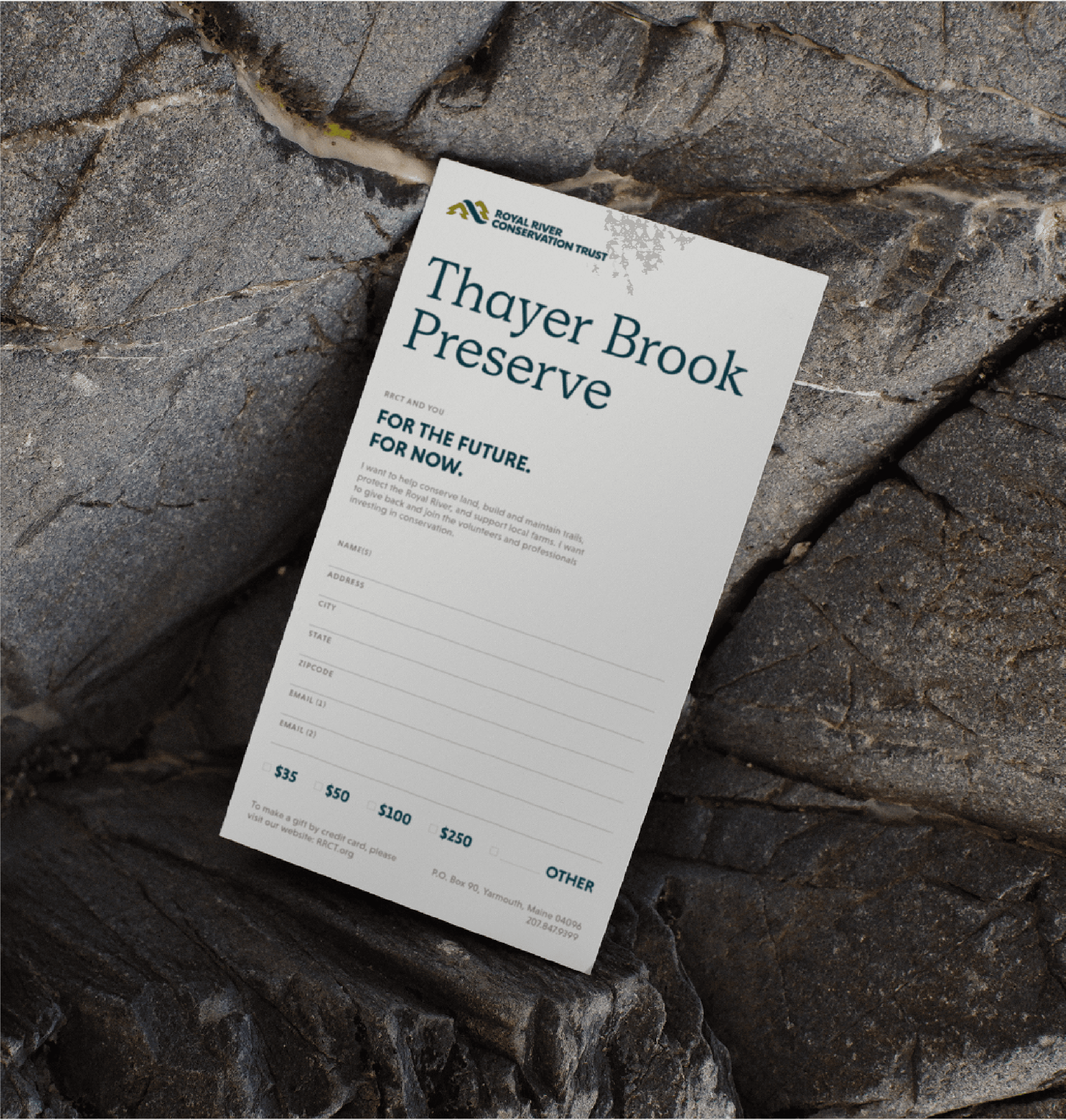
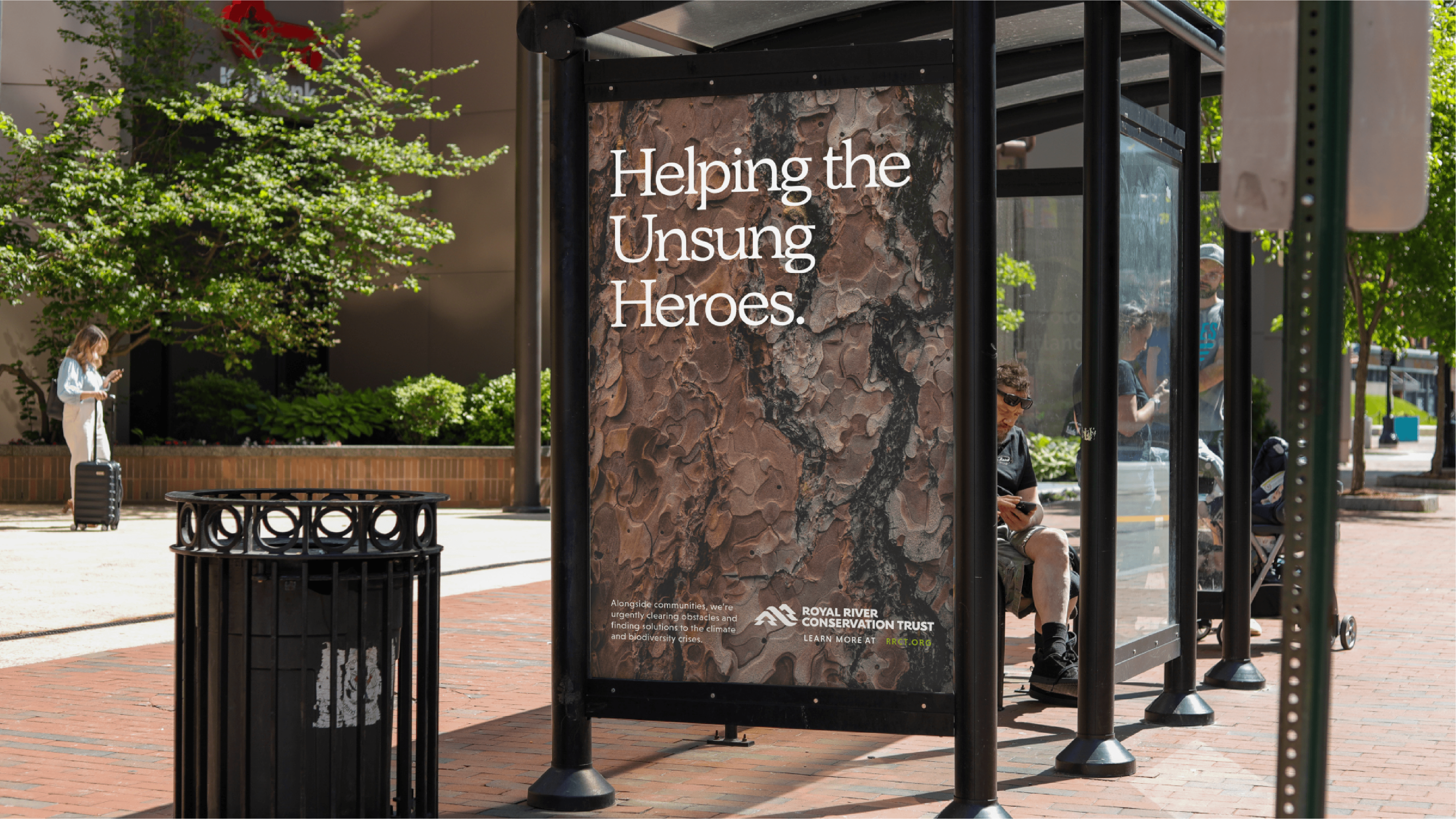
The identity now provides RRCT with a consistent system for communicating across print, digital, and on-the-ground materials. More importantly, it gives the organization a clearer way to explain its work; helping audiences understand not just what land is protected, but how those pieces form a connected watershed. This clarity supports both public engagement and donor communication, strengthening the organization’s ability to grow its impact over time.

Closing
A brand that reflects the watershed as a system; making the work of protecting it visible, legible, and easier to support.




Hospitality - Retail
Next Project:
The Courier Hotel ›

" height="282.00000427246096px" id="auQ3nDAie" width="1120.0000146484376px"/><path d="M 19.8 0 C 8.88 0 0 8.864 0 19.752 C 0 30.639 8.89 39.504 19.8 39.504 C 30.72 39.504 39.6 30.639 39.6 19.752 C 39.6 8.864 30.72 0 19.8 0 Z M 19.8 36.787 C 10.39 36.787 2.72 29.142 2.72 19.752 C 2.72 10.362 10.39 2.717 19.8 2.717 C 29.21 2.717 36.88 10.362 36.88 19.752 C 36.88 29.142 29.21 36.787 19.8 36.787 Z" fill="rgb(244, 63, 28)" height="39.50400000000002px" id="ELbb_RJ7c" transform="translate(1060.02 184.054)" width="39.59999999999991px"/><path d="M 0 0 L 0 16.341 L 3.04 16.341 L 3.04 10.124 L 11.71 10.124 L 15.24 16.341 L 18.69 16.341 L 15.16 10.124 L 18.2 10.124 L 20.97 7.367 L 20.97 2.766 L 18.2 0.01 L 0 0.01 Z M 17.92 3.034 L 17.92 7.08 L 3.04 7.08 L 3.04 3.034 Z" fill="rgb(244, 63, 28)" height="16.341000000000008px" id="B3WshVHjd" transform="translate(1069.67 195.635)" width="20.970000000000027px"/></g></svg>)